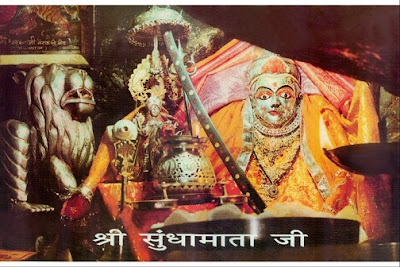
Sundha Mata

Jai Sundha Mata

Sundha Mata temple is about 900 years old temple of Mother goddess situated on a hilltop called 'Sundha', located at Longitude 72.367°E and Latitude 24.833°N, in Jalore District of Rajasthan. It is 64 km from Mount Abu and 20 km from the town of Bhinmal.

Tanot Mata Mandir

Tanot Mata Temple, about 180 Kms from Jaisalmer near Pak Border. Tannot Mata is a temple in western State of Rajasthan in District Jaisalmer of India. The Village is close to border with Pakistan and is very close to the battle site of Longewala of Indo-Pakistani War of 1971.

Sundha Mata

Sundha Mata temple is about 900 years old temple of Mother goddess situated on a hilltop called 'Sundha', located at Longitude 72.367°E and Latitude 24.833°N, in Jalore District of Rajasthan. It is 64 km from Mount Abu and 20 km from the town of Bhinmal.

Jai Sundha Mata

Sundha Mata temple is about 900 years old temple of Mother goddess situated on a hilltop called 'Sundha'.

This is default featured post 5 title

PGo to Blogger edit html and find these sentences.Now replace these sentences with your own descriptions.This theme is Bloggerized by Lasantha Bandara - Premiumbloggertemplates.com.

Tuesday, September 27, 2011

Navratri Day1 : Goddess Shailputri Devi -02

Maa Shailputri – First Among Nava Durgas


Navratri, the festival of nine nights is dedicated to Goddess Durga and her nine forms. According to the Hindu calendar, Navratri begins from the first day of the bright fortnight of Ashwin which usually coincides with the end of the rainy season.

The nine days have great religious significance as Goddess Durga, the divine mother, had destroyed the evil force (in the form of the demon Mahisashura)
During this period. The festival is celebrated with true devotion and purity all over the country. People from various sections of the society irrespective of caste and creed celebrate this festival by visiting temples and offering pujas at the Mother’s feet.
In some places special puja samarohas are also held by setting the images of Mother Durga on beautifully decorated pandals. Temples dedicated to Shakti also make arrangement for pujas and bratas to mark these nine days as true symbols of devotion and adoration towards the divine mother.


Maa Durga manifests herself in nine form called Navdurga. One of these nine forms of Maa Durga is worshiped every day in Navratri. The fisrt form of Maa Durga known as “Shailputri”. Goddess Durga was born in the house of King of Mountains “Parvat Raj Himalaya”, so she is called “Shailputri” maens the daughter of mountain.
Maa Shailputri - First Among Nava Durgas

Maa Shailputri - First Among Nava Durgas

Maa Shailputri is the absolute from of Mother Nature. She is also known as Goddess Parvati the consort of Lord Shiva & mother of Ganesha and Kartikeya. In the Navratra festival the worshiping Mother Goddess has a half moon in her forehead & she is holding a trident in her right hand & lotus flower in her left hand. she rides on mount Nandi a bull.

In some scriptures like Shivapurana & Devi Bhagvatam the story of Mother Goddess is written as follow: Maa Bhagwati in her earlier birth was born as a daughter of Daksh Prajapati. Then her name was ‘Sati’ and she was married to Lord Shiva. But in a sacrificial ceremony organized by her father Prajapati Daksh, she got her body burnt in the yogic fire, because she could not bear the insult of her husband Lord Shiva by her father Prajapati Daksha in the sacrificial ceremony.

In her next birth she incarnated her as Goddess Parvati, the daughter of Parvatraj Himalaya and among Nava Durgas she has been referred to as Sailaputri who was again known as Himavati. In her Haimavati aspect she defeated all prominent gods. Like her previous birth in this life also Maa Shailaputri (Parvati) got married with Lord Shiva. The first and the most prominent among Nava Durgas, Shailaputri is of immense importance and her glories are endless. On the first day of Navratra worship it is she who is worshiped.
Maa Sailputri Story in Hindi

Maa Sailputri Story in Hindi


She is the Devi of the root chakra, who, upon awakening, begins Her journey upwards. Sitting on Nandi, and making her first journey from the Muladarachakra. As from her father to her husband – the awakening Shakti, beginning Her search for Lord Shiva or making a move towards her Shiva. So that, In navrati pooja the first day Yogi’s keep their mind concentrated on Muladhara. This is the starting point of their spiritual discipline. They started their Yogasadha from here. Shaila Putri is the Mooladhara Shakti to be realized within Self and sought for higher depths, in the yogic meditation


वंदे वाद्द्रिछतलाभाय चंद्रार्धकृतशेखराम |
वृषारूढां शूलधरां शैलपुत्री यशस्विनीम्‌ ||


दुर्गा पूजा के प्रथम दिन माता शैलपुत्री की पूजा-वंदना इस मंत्र द्वारा की जाती है.
मां दुर्गा की पहली स्वरूपा और शैलराज हिमालय की पुत्री शैलपुत्री के पूजा के साथ ही दुर्गा पूजा आरम्भ हो जाता है. नवरात्र पूजन के प्रथम दिन कलश स्थापना के साथ इनकी ही पूजा और उपासना की जाती है. माता शैलपुत्री का वाहन वृषभ है, उनके दाहिने हाथ में त्रिशूल और बाएं हाथ में कमल का पुष्प रहता है. नवरात्र के इस प्रथम दिन की उपासना में योगी अपने मन को 'मूलाधार' चक्र में स्थित करते हैं और यहीं से उनकी योग साधना प्रारंभ होता है. पौराणिक कथानुसार मां शैलपुत्री अपने पूर्व जन्म में प्रजापति दक्ष के घर कन्या रूप में उत्पन्न हुई थी. उस समय माता का नाम सती था और इनका विवाह भगवान् शंकर से हुआ था. एक बार प्रजापति दक्ष ने यज्ञ आरम्भ किया और सभी देवताओं को आमंत्रित किया परन्तु भगवान शिव को आमंत्रण नहीं दिया. अपने मां और बहनों से मिलने को आतुर मां सती बिना निमंत्रण के ही जब पिता के घर पहुंची तो उन्हें वहां अपने और भोलेनाथ के प्रति तिरस्कार से भरा भाव मिला. मां सती इस अपमान को सहन नहीं कर सकी और वहीं योगाग्नि द्वारा खुद को जलाकर भस्म कर दिया और अगले जन्म में शैलराज हिमालय के घर पुत्री रूप में जन्म लिया. शैलराज हिमालय के घर जन्म लेने के कारण मां दुर्गा के इस प्रथम स्वरुप को शैल पुत्री कहा जाता है

Vande Vaadidra Chhatalaabhaaya Chandrardh Kritshekhraam
Vrisharudhaam Shooldharaam Shaiputri Yashsvineem.
Durga Pooja ke pratham din Mata Shailputri ki pooja-vandana is mantra dwara ki jati hai.
Maa Durga ki pahli swaroopa aur Shailraaj Himalaya ki putri Shailputri ke pooja ke sath hi Durga Pooja aarambh ho jata hai. Navratra poojan ke pratham din kalash sthapna ke sath inki hi pooja aur aradhna ki jati hai. Mata Shailputri ka vahan Vrishabh hai, unke dahine hath me Trishul aur bayen hath me Kamal ka pushp hai. Navratra ke is pratham din ki upasna me Yogi apne man ko ‘Mooladhar’ chakra me sthit karte hain aur yahi se unki yog sadhna prarambh hota hai. Pauranik kathanusar Maa Shailputri apne purv janm me Prajapati Daksh ke ghar kanya roop me utpann huyi thi. Us samay mata ka naam Sati tha aur inka vivaah Bhagvan Shankar se hua tha. Ek bar Prajapati Daksh ne yagya aarambh kiya aur sabhi devtaao ko aamantrit kiya parantu Bhagvan Shiv ko aamantran nahi diya. Apne maa aur bahno se milne ko aatur Maa Sati bina nimantran ke hi jab pita ke ghar pahunchi to unhe waha apne aur Bholenath ke prati tiraskar se bhara bhav mila. Maa Sati is apmaan ko sahan nahi kar saki aur wahi yogaagni dwara khud ko jalakar bhasm kar diya aur agle janm me Shailraj Himalaya ke ghar putri roop me janm liya. Shailraaj Himalaya ke ghar janm lene ke karan Maa Durga ke is pratham swaroop ko Shailputri kaha jata hai.

Durga came to Earth on the invitation and prayers of the people who were being harassed . She came down in Her form of Mahisha Mardini or the slayer of the Buffalo which has ten hands holding ten different weapons given to Her by the various Gods. She came riding her mount the Lion on the invitiation of Her devotees. On the eighth day of the Sukla Paksha in the month of Ashwin She arrived on Earth. On the ninth day the battle ensued with Mahishasur and the battle continued through the night. The demon hid easily among Buffaloes by taking their form . But Durga cut off its head to reveal the Demon and eventually on the tenth day or on Vijaya dashami She slayed Mahishasur with the help of Her mount the Lion.

This event is celebrated every year as Navaratra. The worship basically begins with the singing of Mahalaya or the invitation from her devotees on the Amabashya or the new Moon of Ashwina which usually comes around September-October. After which the worship of nine nights and ten days begin. The actual installation and worship of theidols of Durga along with the idols of Her children Ganesha and Kartik and Her other forms Saraswati and Lakshmi are worshipped begins on Panchami of Sukla Pakcha. First Saraswati is worshipped on Panchami, then Lakshmi is worshipped on Shasthi who are also considered different forms of Parvati and then Durga is worshipped on Saptami. On the eighth day the puja of Mahasthami is held when She actually arrives from Kailash and enters the clay image. Much fanfare is held to announce Her arrival on this day including the playing of drums, cymbals and conch sehlss and a great worhsip is conducted. During the puja cermonies Mantras are recited by priests and devotees asking the Goddess to give knowledge, wealth and courage to all. On the ninth day the great battle with Mahishasur ensues and is celebrated as Mahanavami. On the tenth day victory over the demon is celebrated by the puja of Vijaya Dashami. After the ceremonies the clay images are floated into nearby rivers and the ceremony is called Visarjan.

Navaratri is celebrated four times a year. They are Ashada Navaratri, the Sharada Navaratri, the Maha Navaratri and the Vasantha Navaratri. Of these, the Sharada Navaratri of the month of Ashwin and the Vasantha Navaratri of the Chaitra are very important. If you refer to the Agni Purana, then it is said that the Asvin and Chaitra are like the two jaws of Lord Yama. If one wants to escape the mouth of Yama, then one should celebrate Navaratri on these two occassions. A similar analogy is presented in the Devi Bhagavatam.

Devi Bhagavatam also talks in detail on how one should observe fasts, and how one should meditate/work on these days. It is a long tradition that one reads the Devi Bhagavatam or the Devi Mahatmyam (Durga Saptasati, 700 verses on Durga) during this period. Devi Bhagavatam notes that Rama meditated and fasted for nine days after Sita was kidnapped by Ravana. There are numerous such incidents on how people’s wishes were granted.


save

Navratri Day1 : Goddess Shailputri Devi

Goddess Shailputri Devi - First Mata

Goddess Shailputri Mata is a daughter of Himalaya and first among nine avtar of Durgas. In previous birth she was the daughter of king Daksha. Her name was Shailputri, Sati - Bhavani. the wife of Lord Shiva. Once Daksha had organized a big Yagna and did not invite Shiva. But Sati being obstinate, reached there. Thereupon Daksha insulted Shiva. Sati could not tolerate the insult of husband and burnt herself in the fire of Yagna. In other birth she became the daughter of Himalaya in the name of Parvati - Hemvati and got married with Shiva. As per Upanishad she had torn and the egotism of Indra, etc. Devtas. Being ashamed they bowed and prayed that, "In fact, thou are Shakti, we all - Brahma, Vishnu and Shiv are capable by getting Shakti from you."
Mata Shailputri holds a Trishul, a weapon, in her right hand and a lotus in her left hand. She rides on bull. She has pleasant smile and blissful looks.

Vande vanchhitlabhaye chandrakritshekhram !
Vrisharunda shulhara Shailputri yashsivneem !!

शैलपुत्री
वन्दे वाञ्छितलाभाय चन्द्रार्धकृतशेखराम् ।

वृषारुढ़ां शूलधरां शैलपुत्रीं यशस्विनीम् ।।

माँ दुर्गा अपने प्रथम स्वरूप में शैलपुत्री के रूप में जानी जाती हैं। पर्वतराज हिमालय के घर जन्म लेने के कारण इन्हें शैल पुत्री कहा गया। भगवती का वाहन बैल है। इनके दाहिने हाथ में त्रिशूल और बाएं हाथ में कमल का पुष्प है। अपने पूर्व जन्म में ये सती नाम से प्रजापति दक्ष की पुत्री थी । इनका विवाह भगवान शंकर से हुआ था। पूर्वजन्म की भांति इस जन्म में भी यह भगवान शंकर की अर्द्धांगिनी बनीं। नव दुर्गाओं में शैलपुत्री दुर्गा का महत्त्व और शक्तियाँ अनन्त हैं। नवरात्रे - पूजन में प्रथम दिवस इन्हीं की पूजा व उपासना की जाती है।


ध्यान

वंदे वांच्छितलाभायाचंद्रार्धकृतशेखराम्।
वृषारूढांशूलधरांशैलपुत्रीयशस्विनीम्॥
पूणेंदुनिभांगौरी मूलाधार स्थितांप्रथम दुर्गा त्रिनेत्रा।
पटांबरपरिधानांरत्नकिरीटांनानालंकारभूषिता॥
प्रफुल्ल वदनांपल्लवाधरांकांतकपोलांतुंग कुचाम्।
कमनीयांलावण्यांस्मेरमुखीक्षीणमध्यांनितंबनीम्॥

स्तोत्र

प्रथम दुर्गा त्वहिभवसागर तारणीम्।
धन ऐश्वर्य दायिनी शैलपुत्रीप्रणमाभ्यहम्॥
त्रिलोकजननींत्वंहिपरमानंद प्रदीयनाम्।
सौभाग्यारोग्यदायनीशैलपुत्रीप्रणमाभ्यहम्॥
चराचरेश्वरीत्वंहिमहामोह विनाशिन।
भुक्ति, मुक्ति दायनी,शैलपुत्रीप्रणमाभ्यहम्॥
चराचरेश्वरीत्वंहिमहामोह विनाशिन।
भुक्ति, मुक्ति दायिनी शैलपुत्रीप्रणमाभ्यहम्॥

कवच

ओमकार: में शिर: पातुमूलाधार निवासिनी।
हींकार,पातुललाटेबीजरूपामहेश्वरी॥
श्रीकार:पातुवदनेलज्जारूपामहेश्वरी।
हूंकार:पातुहृदयेतारिणी शक्ति स्वघृत॥
फट्कार:पातुसर्वागेसर्व सिद्धि फलप्रदा।
मां दुर्गा का द्वितीय स्वरूप ब्रह्मचारिणी


save

Navratri-03

Navratri Puja
Navratri is celebrated twice in a year.One after the festival of Holi in the month of Chaitra Shukla Paksha from Ekam (First day) to Navmi (Ninth day). These are called Vasanth Navratri. In this, prayers are offered to Lord Vishnu.

Once before Dussehra in the month of Ashwin Shukla Paksha on Ekam (first Day) to Navmi (9th day). These are called Sharadeeya Navratri. In these nine days of Navratri, we pray to Durga Maa. On the eight day of this Navratri, Durga Maa was born, hence her puja on this day is of special significance. These nine days also have a special significance for unmarried girls.

Durga Puja Preparation for the puja
  • - Picture or image of Durga Maa
  • - Durga Sapthashati book, Devi’s armour
  • - Water in a kalash, mango leaves, coconut
  • - Roli, moli, chawal, paan, betl nut.
  • - Cloves, cardamom, sindoor, abhir, gulal
  • - Dhoop, deepak, matchsticks
  • - Flowers such as hibiscus, lotus, roses and belpatr leaves
  • - Fruits such as pomegranate and sweets such as laddoo and peda
  • - Panchpatra containing spoon and water, pata, mat to sit (Aasan)
  • Jhuwara is grown - On the first day of Navratri, take a large earthen pot with a wide mouth, put some sand in it and plant either jaun or wheat kernels which have been soaked the previous night. Every day a little water is sprinkled over them and they are put in sunlight for a short time for germination.

Vidhi / Method of performing Puja

Place the kalash by putting wheat grains on the pata, fill water in the kalash, place live mango tree leaves in the mouth of the kalash and put a coconut in the middle, Moli is tied on the neck ofthe kalash. Place Durga Maa’s image on the pata and worship with roli, rice, flowers, belpatr, sindoor, abhir and gulal.
Maa ki jyoti lena
Take a small clay pot, add a burning coal to the pot, pour ghee over the coal and offer a small piece of laddoo, peda or halwa. Keep adding ghee at intervals. The higher the flame the more auspicious it is. This jyoti / light has to be maintained throughout the puia. At the conclusion, fold your hands and circle them around the jyoti.
Light dhoop and deepak
Perform Durga Saptashati or Devi Kavach (hymn invoking Devi's protection) either yourself or by a Pundit. Some people go to the temple for these nine days to perform the puja.

Many people fast on this Day. At least one meal should be a phalaahaar and the other can be with cereal. Many people conclude the puja on the 8th day by doing Devi ki Kadhai. On this day, Maa ki jyoti is taken with halwa. You should make atta halwa, chawal ki kheer, puri, kaala chana (black grain) and one or two vegetables. Unmarried girls are invited for meal. After the food, the girls are given some fruits and money as Dakshina. Some people do Devi ki Kadhai on the 9th day.

‘Durga Stuti’ is sung:

“Ya Devi Sarvabhuteshu shri rupen sansthita
namas tasye namas tasye names tasye namo namah”


‘Durga Maa ki Aarti’ is sung:

Jai Ambe Gauri, Mayya Jai Shyama Gauri...
Tumko Nishidin Dhyavat, Tumko Sabdin Sevat, Hari Brahma Shivji... Jai!!

Manga Sindoor Virajat, Teeko Mrigmad Ko, Maiya Teeko Mrigmad Ko...
Ujjwal Se Dou Naina, Ujjwal Se Dou Naina, Chandra Vadan Neeko… Jai!!

Kanak Saman Kalevar, Raktambar Raje, Maiya Raktambar Raje…
Raktapushpa Galmala, Lalpushpa Galmala, Kantahan Har Saje… Jai!!
s
Kehari Vahan Rajat, Khadag Khappar Dhari, Maiya Khadag Khappar Dhari…
Sur Nar Munijan Sewat, Sur Nar Munijan Sewat, Tinke Dukkhahari… Jai!!

Kanan Kundal Shobhit, Nasagre Moti, Maiya Nasagre Moti…
Kotik Chandra Diwakar, Kotik Surya Diwakar, Samrajat Jyoti… Jai!!

Shumbhu Nishumbha Vidare, Mahishasur Ghati, Maiya Mahishasur Ghati…
Dhoomra Vilochana Naina, Madhura Vilochana Naina, Nishidin Madmati… Jai!!

Brahmani Rudraini, Tum Kamala Rani, Maiya Tum Kamala Rani…
Aagam Nigam Bhakhani, Aagam Nigam Bhakhani, Tum Shiv Patrani… Jai!!

Chaunsath Yogini Gavet, Nritya Karen Bhairon, Maiya Nritya Karen Bhairon…
Bajat Tal Mridanga, Bajat Dhol Mridanga, Aur Bajat Dumroo… Jai!!

Bhuja Char Ati Shobhit, Var Mudra Dhari, Maiya Var Mudra Dhari…
Manwanchhit Phal Pavat, Man Iccha Phal Pavat, Sewat Nar Nari… Jai!!

Kanchan Thal Virajat, Agar Kapoor Bati, Maiya Agar Kapoor Bati…
Malketu Mein Rajat, Malketu Men Rajat, Koti Ratan Jyoti… Jai!!

Durgaji Ki Aarti, Jo Koi Nar Gave, Maiya Jo Sunder Gave…
Kahat Shivananda Swami, Ratata Shivananda Swami, Sukh Sampati Pave!!

Jai Ambe Gauri, Mayya Jai Shyama Gauri...
Tumko Nishidin Dhyavat, Tumko Sabdin Sevat, Hari Brahma Shivji!!


save

Navratri-02

Navratri, the festival of nine nights is dedicated to Goddess Durga and her nine forms. According to the Hindu calendar, Navratri begins from the first day of the bright fortnight of Ashwin which usually coincides with the end of the rainy season.

The nine days have great religious significance as Goddess Durga, the divine mother, had destroyed the evil force (in the form of the demon Mahisashura)
During this period. The festival is celebrated with true devotion and purity all over the country. People from various sections of the society irrespective of caste and creed celebrate this festival by visiting temples and offering pujas at the Mother’s feet.
In some places special puja samarohas are also held by setting the images of Mother Durga on beautifully decorated pandals. Temples dedicated to Shakti also make arrangement for pujas and bratas to mark these nine days as true symbols of devotion and adoration towards the divine mother.


save

Navratri-01

Navratri Significance

The beginning of spring and the beginning of autumn are two very important junctions of climatic and solar influence. These two periods are taken as sacred opportunities for the worship of the Divine Mother. The dates of the festival are determined according to the lunar calendar.

Navaratri represents celebration of Goddess Durga, the manifestation of Deity in form of Shakti [Energy or Power]. The Navaratri festival or ‘Nine Nights festival’ becomes ‘ten days festival’ with the addition of the last day, Vijayadashami which is its culmination. On all these ten days, the various forms of Mother Mahisasura-mardini (Durga) are worshipped with fervor and devotion.


Sundha Mata : Purnima Mela -01

Purnima Tithi


Kartik Poornima

Kartik Poornima (Kartik purnima) is a Hindu holy day celebrated on the full moon day or the fifteenth lunar day of Kartik (November–December). It is also known as Tripuri poornima and Tripurari Poornima. It is sometimes called Deva-Diwali or Deva-Deppawali - the festival of lights of the gods. The Kartik Purnima festival also coincides with the Sikh festival of Guru Nanak Jayanti.

Kartik Poornima is closely associated with Prabodhini Ekadashi which marks the end of Chaturmas, a four-month period when Vishnu is believed to sleep. Prabodhini Ekadashi signifies the awakening of the god. Chaturmas penance ends on this day. Many fairs that begin on Prabodhini Ekadashi end on Kartik Poornima, Kartik Poornima usually being the most important day of the fair.[3] Fairs that conclude on this day include Prabodhini Ekadashi celebrations at Pandharpur and Pushkar Fair. Kartik Poornima is also the last day to perform Tulsi Vivah ceremony that can be performed from Prabodhini Ekadashi.

In Pushkar, Rajasthan, the Pushkar Fair or Pushkar mela commences on Prabodhini Ekadashi and continues till Kartik Poornima, the latter being the most important. This fair is held in the honour of god Brahma, whose temple stands at Pushkar. A ritual bath on Kartik Poornima in the Pushkar Lake is considered to lead one to salvation. It is believed circling the three Pushkars on Kartik Poornima is highly meritorious. Sadhus gather here and stay from ekadashi to full moon day in caves. About 200,000 people and 25,000 camels assemble in Pushkar for the fair. Pushkar fair is Asia's largest camel fair.

A ritual bath at a tirtha (a sacred water body like a lake or river) at a pilgrimage centre is prescribed on Kartik Poornima. This holy bath is known as "Kartik snana".[3][11] An holy bath at Pushkar or in the Ganges river, especially at Varanasi is deemed as most auspicious. Kartik Poornima is the most popular day for bathing in the Ganges at Varanasi.[4]

Annakuta, an offering of food to the deities, is held in temples.[3] People who have taken vows on Ashwin full moon day, end them on Kartik Poornima. God Vishnu is also worshipped on this day. Any form of violence (himsa) is prohibited on this day. This includes shaving, hair-cutting, cutting of trees, plucking of fruits and flowers, cutting of crops and even, sexual union.[11] Charity especially donation of cows, feeding of Brahmins, fasting are religious activities prescribed for Kartik Poornima.[4]

Tripuri Poornima is only next to Mahashivratri, amongst festivals dedicated to Shiva worship.[5] To commemorate the killing of Tripurasura, images of Shiva are carried in procession. Temple complexes in soutern India are lit up throughout the night. Deepmalas or towers of lights are illuminated in temples. People place 360 or 720 wicks in temples, to secure escape reaching hell after death.[3] The 720 wicks symbolizes the 360 days and nights of the Hindu calenadr.[4] In Varanasi, the ghats come alive with thousands of diyas (brightly-lit earthen lamps).[4] People gift lamps to priests. The lamps are kept throughout the night in houses and Shiva temples. This day is also known as "Kartik Diparatna" - the jewel of lamps in Kartik.[5] Lights are also floated in miniature boats in rivers. Lights are placed under Tulsi, Sacred fig and Amla tress. The lights in the water and under trees are believed to help fishes, insects and birds who saw the light to attain salvation.[11]


Sundha Mata: View in Navratri -01

Temple view in Navratras


Happy Navratri to all Mata's Devotee


Navratri, Navaratri, or Navarathri (Sanskrit: नवरात्रम्; Tamil: நவராத்திரி, Hindi: नवरात्रि, and Nepali: नवरात्रि;Marathi: नवरात्र;Bengali: নবরাত্রি; Gujarati: નવરાત્રી; Kannada: ನವರಾತ್ರಿ; Telugu: దుర్గా నవరాత్రులు; Malayalam: നവരാത്രി) is a Hindu festival of worship of Shakti and dance & festivities. The word Navaratri literally means nine nights in Sanskrit, nava meaning nine and ratri meaning nights. During these nine nights and ten days, nine forms of Shakti/Devi are worshiped. The 10th day is commonly referred to as Vijayadashami or Dashera.

Sunday, September 25, 2011

108 Devi Maa -02

Mahishasura Mardini Maa


Vaishno Devi Maa

Santoshi Maa

Skanda Mata

Savitri Maa

Sailaputri Maa

Saraswathi Mata

Ganga Maiya

Karni Mata

Chandra Ghanta Devi

Bharat Mata

Gayatri Mata