




1. Introduction of Jalore district : name, location, area, construction of the present form, shape, geological structures- ancient alluvial plain, alluvial plain, ground sand, granite and rayolait mountains, flow system- Luni, Jwai, Sukdi, Khari, Bandi, Sagi, climate, Soils, sand mounds deposition, saline and alkali Soils.
2. Human habitation : Distribution and population growth, rural and urban distribution, ten-year changes, classification of villages according to population, population density, sex ratio, SC and ST population, literacy, literacy rate, working population.
3. Administration : Administration at the time of independence, judicial and administrative restructuring, the current administrative system, magistrates, revenue development, Panchayati Raj, police, public relations.
4. Development : Land use, Agriculture, millets, wheat, barley, maize, gram, pulses, sesame, mustard and Raidha, peanuts, other oilseeds, spices, Isbgol, fruit, vegetable, fruits. Irrigation, Dams, Bankli dam, Bithan dam, Chitalwana dam, Chavarcha dam, gauge of dams, Animal husbandry, Electricity, Transport, Roads, Railways, Education.
5. Construction of Maru and Dhanwa lands : Opinions of Abul Fazal, Col. Tod and other scholars, Opinions of Pandit Ramkaran Asopa and Acharya Parmeshwar Solanki, descriptions in Valmiki Ramayana, Medicines of region, two oceans of east and west, samvartak agni and flood, opinion of Pandit Bhagawat Dutta, flow area of Saraswati river.
6. Ancient history : Luni river civilization, Rangmahal civilization, Ahadh civilization, red and black pottery, copper and bronze tools, bone relics of dead animals, Indus Valley civilization, relics of first century AD, regional coins, Roman amphora.
7. Mythological context : Mnu smriti, Dhundumara the mythological narrative, Yadav's and Drauhu's rule, the ashram of Rishi Jabali, Lord Vishnu and Lakshmi's arrival in Srimal region, by Lord Shiva tells Gautam Rishi the location of Trayambak lake, arrival of Bharadwaj, Vashishtha, Narada etc. Bkasur slaughter by Chamunda, Ravana defeats Kubera and arrival of Kubera in Srimal, arrival of Gautam and Markandey, Lord Rama rests in Ramsin, Balrama and Lord Krishna go to Indraprastha from Dwarkavia via bhadrajun, routs during Panini's period, Shalv settlements, Ajurn marries Subhadra, Awantika, Mahajnpd period, Avnti State and Cndpradyot, Watsraj Udyan, ancient Indian's legends in Jain litrature, Nand regime, Shishunag regime, Mahapdmnand's rule in Magadh, correct date of Mahabharata period, Gita's verses found in pyramids of Egypt, Aryan mystery, Chandragupta Maurya and Alexander, Pushpgupt and Tushasfa.
8. Foreign rulers : Greek rulers, Dimatriys or Minandr's attack on Madyamika, Pusyamitra Sung, Sithiyn, Junagadh record, Bhinmal coins, Baori construction in Bhinmal city, Karkandhu and Shakandhu, Yuchi, Hunganoo, Shak dweep, entry of shakas into India, Kshaharat descendants, Bhumk, Nahapan, Satavahana, defeat of Kshaharats. Chashtan descendants, Andhau records, Jaydaman, Rudradaman, double rule system, Rudradaman's successor, Damjad or Damaghasd, Jivadaman, Rudrasinh first, Rudrabhuti, Rudrasen first, Sinhdamn, war against Malvas, Damsen, Yashodaman, Vijaysinh and Vijaysen Damjad Bhrirt Daman, Ssanian occupation, society during Shak rule, economic system, colonization in Yav dweep and Suvarn dweep, Prakrit and Sanskrit inscriptions.
9. Gupta Dynesty : Chandragupta II's victory over Rudrasinh IIIrd, Dates of Rudrasinh III's coins, silver currencies of Chandragupta II, Gupta period architecture and art from Bhinmal elegance, the wrangling of dates.
10. Huns : Hun currencies from Jalore, description of Kanhdde prabandha, description of Kuvlymala of Udyotn Suri, invasions of Torman, Mihirkul, description of Huentsang, war between Narsinhgupta Baladity and Mihirkul, betray against King of Kashmir, capturing of Gandhara, defeat against Yashovrmn of Malwa, Mandsaur records, downfall of Huns, war against Turks and Rajputs, Hun influence, destruction and massacre.
11. Gujjars: Opinions of General Kaningham, B. A. Smith, James campbell and Devdutt Ramakrishna Bhandarkar, origination from Khajars, relation with white Huns, establishment of capital in Bhinmal, criticism of foreign scholars by Ojha, Gujjar Pradesh, Huentsang's Bhinmal visit, Pratihar Bhojdev's donation plate and the inscription of Kalinjar, expansion and contraction of Gujjar's borders, Gurjjars's downfall, Kalchuri donation plate of Chalukya Samanta Pulkeshi, capture by Chawdas.
12. Chawdas : Bhinmal the most ancient kingdom, Kingdoms of Vadhwan and Anhilvadha, origin, donation plate of Dharanivarah, origin from Shankar's bow, Col. Tad's opinion, Ojha's opinion, Vasantgadh inscription, Razzil the knight of Warmlat, Shishupal slaughter, description by Bramhagupta, Nishith Cuarni, Arab invasion, description in Ftuhl-Bldan, fall of chawadas by Pratihars.
13. Fall of ancient Kshatriyas and rise of Rajputs : Harsha's death, the establishment of Delhi Sultanate, legends, Opinions of Col. Todd, Smith, Crooke and Bhandarkar, descendants of the the ancient Kshatriyas, Kshatriyas of Rajasthan, mixed blood, foreigners added into Indian society by Hribdra Suri in Bhinmal, Mount Abu Conference, Rajputs split, Jalor during Rajput regime, Navkoti Marwar, religion, education, literature, language, script, Khalji attack.
14. Gujjar Pratihar : Empire expansion, the origin, opinion of Kennedy, Kaningham, Beular, Harnle, R. C. Majumdar, Bhandarkar, Ojha and other scholars, description by Huentsang, Gwalior records, Vidwshal Bhanjika, description by Bramhagupt, Jodhpur and Gkatiyala inscription, Sanjan copper plate, Tad's opinion, Bhinmal or Jalor as capital, description in Vividh teertha kalp, Jalor Branch of Pratihars, Nagbhatt first, Devaraj, Watsraj, defeat of bhandis, defeat of Watsraj by Dhruv, creation of Kuvlymala, Nagbhatt II, attack by Govind third, defeat of Chakrayudh, defeat of Dharmpal, Nagbhatt II's political achievements, Rambhadra, achievements of Mihir Bhoj first, Mahendrapal first, Bhoj II, Mahipal first Mahendra Pal II, Devpal, decline of Pratihars, powers and services of Pratihars, key administration officials, provincial government, source of revenue, military, police and justice system, society, marriages, education, religion.
15. Parmar : Munj, Parmars from Jalor Genealogy, origin, early king's, birth story of Munj, Munj's achievements, capturing of by Bhinmal by Munj, Chandan, Devaraj, Durlbhraj, Ropsi copper plate and inscriptions, Sindhuraj, Bhoj, Sanskrit school Jalor, Krishnraj, Udayraj, Someshwar, Jai, Salakha, Kunbhatpal, capturing of Jalor by Kirtipal, administration, state officials, Ministers, Mandal, Samnti system, military, revenue, justice and police, art and literature.
16. Chaulukys : Chauluky or Solanki, Chandravanshiy kshatriyas, Mulraj first, Sanchor becomes the capital of Gujarat, Bhim first arrests Krishnraj, Chamundraj, Durlabhraj, Bhimdev first runs away from Sanchor due to Gajnavi's fear, Karn, Jai Siddhraj, Janachary Hemchandra the courtier of Siddharaj, Kumarpal and its achievements, religion.
17. Dahiya : Nansi Mutha's description, reconstruction of Jalor fort, James, Todd's description, Kewaymata inscriptions, error in Nansi's description.
18. Chauhan : origin of Chauhans, Agnivanshiy, Sewadi inscription, Ikshwaku Vanshiy, Brahmin Vanshiy, original location, Chauhanon invasion of Jalore, Sonagra Chauhan, Kirtipal captures jalore, other achievements of Kirtipal, Smarsingh, Udaysingh, Chachigdev, Samantsingh, Kanhaddev, Alauddin's Gujarat campaign, victorious Muslim army's camp at Sankarna, initial clashes, Mongols resistance, salvage of Sumaya Mahadev by Kanhaddev, legend given by Nansi, Kandhal goes to royal camp, Khalji again invades Jalor in 1305AD, Panju's story, princess Satai insists Viram to marry, collapse of Siwana, Khudala victory of Rajputs, the final attack, fall of fort, Johar by the queens of Kanhddev, Kanhaddev disappears from battle, sacrifice of Viramdev. Administration of Sonagaras, King, Ministers, military, feudatory, local government, Panchkul, society, religion, philosophy and thinking process, Sati dharm, kesaria, respect of scholars, Women's place in society, Surya, Vishnu, Shiva and Shakti worship.
19. Other Chauhan dynasties of Jalor area : Sanchora Chauhan, Boda Chauhan, Kampalia Chauhan, Deora Chauhan .
20. Muslim period : Kamaluddin Gurg and Mahmud Hoshang, Malik Dawood, Sonagras to reoccupy, Pompabai, Bihari Pathan, Malik Khurram, Yousuf Khan, Hasan Khan, Usman Khan, Buddan Khan, Ghazni Khan, Sikander Khan, Sher Shah Suri, Blochi Pathan, Malik Khan, Maldev, Taj Khan, Ghazni Khan II, Pahad Khan, Khurram, Sursingh and Gajsingh, Sisodia Bimsingh, Mirkhan, Rajakhan, Mughal emperor Aurangzeb declares jalore as Khalsa, Fataehakhan, Bahalol Khan, Syed Qasim, Dewan Kamal Khan.
21. Rathore: Origin, Rathores of Marwar, Rao Sihaji, Teedaji, establishment of state of Mndor and Jodhpur, Maldev, Chandrasen, Motaraja Udaysinh, Sursinh, Gajsingh, Jaswant Singh, Ajitsingh, Abhaysingh, Ramsingh, Bakhatsingh, Vijaysingh, Bhimsingh, Mansingh, Takhatsingh, Jaswant Singh II and his heirs.
22. Details of Parganaes : administrative operations, Pargane or hukumats, Courts of Hakims, restructuring of the judicial structure, Jalore, Jaswantpura and Sanchore hukumats, land rights, Jagirdari Rekchakri, lag-bag.
23. Freedom : Marwar Hitkarini sabha, disobedience movement of Youth leeg, civil liberties union, Marwar Lok Parishad, Jodhpur Government Act 1944, Hanuwantsingh, Mohammed Ali Jinnah, Sardar Patel and Mount Betan, after independence, United State of Greater Rajasthan, Marwar tenancy act, land revenue Act of Marwar, construction of Jodhpur division and Jalore district, Collector and Magistrate.
24 Cultural heritage : background, painting, sculpture, architecture, literature, literature of modern times, folk literature, folk beliefs, folk gods, folk dance, Mamaji ke Ghore.
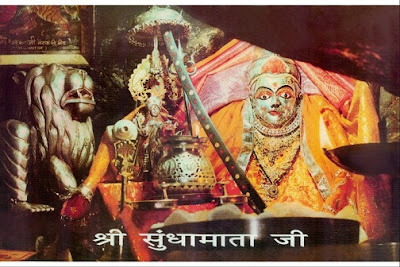
25. Tourism : Jalore fort, artillery, Jaswantpura Hills, Sire Mandir, Mahadev Jagnath, Sewada of Pataleshhwar, Nilkantha Mahadev, Apeshwar Mahadev, Modran Ashapuri Temple, Sundha Mata Temple, Temple of Warahshyam at Bhinmal, Mandoli temple, Nndishwar shrine, major fairs, industrial landscape


